





A serious truck crash. A team focused on you.
Feagans Law Group P.C. helps people injured in Geneva truck accidents investigate what happened, identify responsible parties, and pursue compensation while they focus on recovery. A collision with a tractor-trailer or delivery truck can leave you facing medical bills, missed work, and questions from several insurers at once.
You deserve clear answers and personal attention. Our husband-and-wife founding team builds a relationship with each client, learns how the injury has changed daily life, and explains the next step. Start with a free consultation; you do not need every record or answer before calling.
How our Geneva truck accident lawyers help
A commercial truck claim can involve a driver, a motor carrier, equipment owners, and more than one insurance policy. We look beyond the collision report to understand the decisions, records, and relationships behind the crash.
- Investigate the collision and identify the people and companies involved.
- Seek preservation of vehicle data, video, and relevant trucking records.
- Document treatment, income loss, and the future effects of serious injuries.
- Handle insurer communications and evaluate settlement offers.
- Prepare the case for litigation when a fair resolution cannot be reached.
 Reviews
★★★★★
“They have been great at listening and providing honest and professional communication.”
Daniel Wheeler
★★★★★
“They go above and beyond, to fight on your behalf and help you get the outcome you deserve.”
★★★★★
“They treated me like family throughout the process and assured my best interest remained priority.”
Meet Joshua and Kathryn Feagans
Joshua and Kathryn Feagans founded the firm to provide Geneva residents with high-quality, personal legal representation.

Joshua M. Feagans
Joshua is a founding partner and leads the firm’s trial team and litigation practice, including serious motor vehicle injury cases.

Kathryn A. Feagans
Kathryn oversees the personal injury practice. Her past work as an insurance adjuster and attorney for insurers informs how she prepares and presents injury claims.
Awards & associations


The evidence goes beyond the police report
The most useful evidence may belong to the trucking company or another business. Video can be overwritten, vehicles can be repaired, and electronic records may not remain available indefinitely. Early legal help can identify what needs to be requested and preserved.
The truck’s digital trail
Available engine-control data, dashcam footage, GPS records, and electronic driving logs may help explain speed, braking, location, and driving time. The information a truck records depends on its equipment; a “black box” does not capture everything.
The company’s records
Driver qualification files, dispatch messages, inspection reports, maintenance histories, and cargo documents can help test whether unsafe practices contributed to the collision. The truck’s owner and the company operating it may be different entities.
Your losses and recovery
Medical records, treatment recommendations, wage information, receipts, and a record of daily limitations help connect the crash to your losses. Reconstruction and medical experts may be needed when the evidence or future effects are disputed.
FMCSA generally requires carriers to retain drivers’ records of duty status and supporting documents for six months. That is a recordkeeping rule, not a safe waiting period or the lawsuit deadline. Other evidence may disappear much sooner. FMCSA record-retention guidance.
Truck collisions we investigate
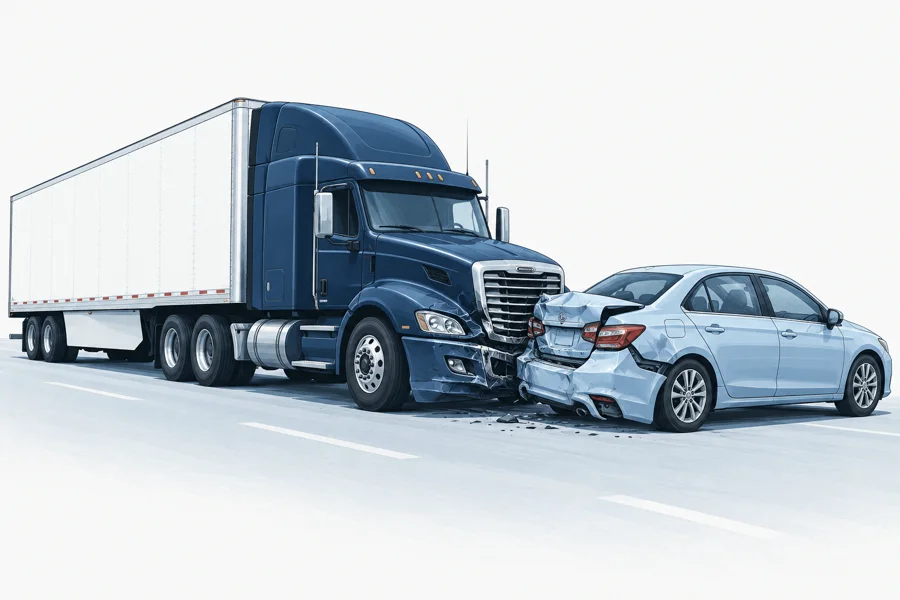
Rear-end collisions
Braking distance, following distance, distraction, and road conditions may help explain why a truck struck a vehicle ahead. A chain-reaction crash requires careful review of each impact.
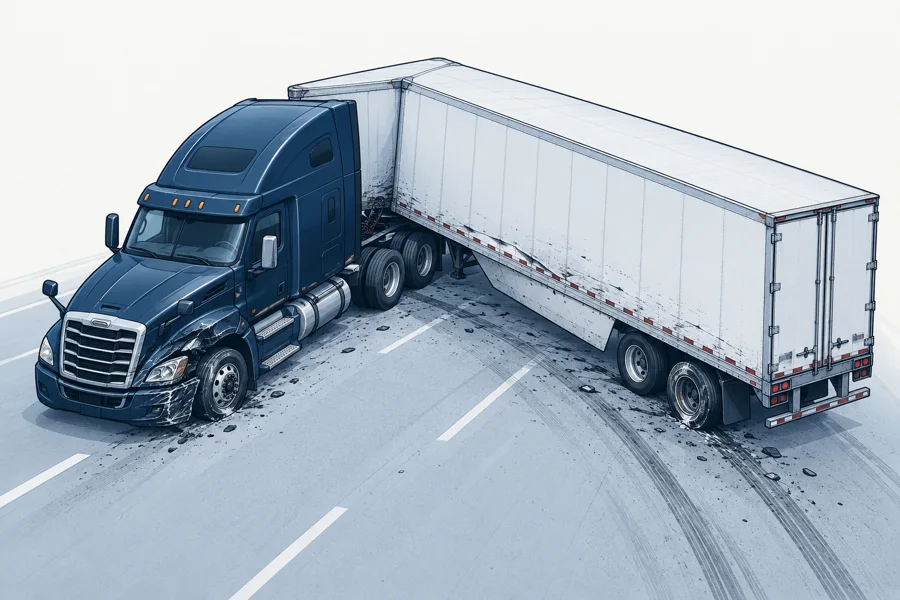
Jackknifes and rollovers
A trailer that swings out or tips over raises questions about speed, braking, cargo distribution, road conditions, and vehicle maintenance. The crash pattern alone does not establish fault.

Sideswipes and turning crashes
Blind spots, lane changes, wide turns, and intersection movements can put smaller vehicles alongside a truck’s path. Video, sight lines, and vehicle damage help reconstruct the movements.
Claims can involve tractor-trailers, box trucks, dump trucks, and delivery vehicles. Our related Geneva pages cover Amazon truck accidents and delivery truck accidents. The company name on a vehicle is a starting point for investigation, not proof of who is legally responsible.
What to do after a truck accident
Start with safety and medical needs. Then preserve the information that may help explain what happened. If you are unable to take these steps because you are injured, ask someone you trust for help.
Your health comes first.
1
Get help and medical care
Call 911 for an emergency. Stay at the scene, assist as safely as you can, and follow responders’ instructions. Seek appropriate medical attention and tell your provider about your symptoms.
2
Preserve the details
If safe, photograph the vehicles, damage, road, and the carrier name and USDOT number on the truck. Exchange driver and insurance information, collect witness contacts, and save available dashcam footage. Do not put yourself in traffic to gather evidence.
3
Protect the claim
Keep the incident number, medical paperwork, bills, and insurer correspondence. Notify your own insurer promptly as your policy requires. Get legal advice before signing a release or giving the other insurer a recorded statement.
Keep a clear record.
Be accurate when describing the crash; do not guess about speed, distance, or injuries. A police report is useful evidence, but an officer’s opinion does not finally decide fault in a civil injury case. Keep a record of missed work and the everyday activities your injuries affect.
Who may be responsible for a truck accident?
A claim starts with evidence of what each party did and how it contributed to the injury. Responsibility is not automatic simply because a company owns a truck or arranged a shipment.
Driver and motor carrier
Unsafe driving may support a claim against the driver. Depending on the relationship and facts, a carrier may be responsible for its driver’s conduct or for its own negligent hiring, supervision, scheduling, or maintenance.
Other businesses in the chain
An equipment owner, maintenance provider, cargo loader, or manufacturer may be involved if its conduct or a defect contributed to the crash. Their duties, contracts, and control over the work require individual review.
We investigate these relationships alongside the physical evidence. Several defendants can mean separate insurance policies and competing accounts of what happened. A careful investigation helps identify supported claims rather than assuming every business connected to the truck is liable.
Safety rules can help explain what went wrong
Federal safety requirements may apply depending on the vehicle and operation, and Illinois rules also matter. The investigation should connect any violation to the crash; a regulatory issue by itself does not establish every element of an injury claim.
Driving time and fatigue
For property-carrying drivers covered by the federal rules, the usual limits include 11 hours of driving after 10 consecutive hours off duty and a 14-hour driving window. Exceptions apply. Logs and dispatch records can help test a fatigue concern.
Maintenance and cargo
Inspection and repair records may reveal brake, tire, or other equipment problems. Cargo records can help explain shifting loads or securement issues. The relevant rules depend on the vehicle, cargo, and trip.
Distraction, speeding, impairment, unsafe lane changes, and failure to adjust to weather also deserve investigation. FMCSA hours-of-service rules · FMCSA cargo-securement rules.
Illinois rules that can affect your claim
50%
The shared-fault threshold
Under 735 ILCS 5/2-1116, you are barred from recovering if your share of fault is more than 50%. At 50% or less, recoverable damages are reduced by your percentage.
How the reduction works
For example, 20% fault reduces a $100,000 damages finding to $80,000. This illustrates the rule, not an estimate of your case.
2 years
The usual filing deadline
Most Illinois crash injury lawsuits must be filed within two years after the claim accrues, often the accident date, under 735 ILCS 5/13-202.
Some deadlines are shorter
Exceptions can change the deadline. Many injury suits against local public entities or employees have a one-year deadline under 745 ILCS 10/8-101.
Do not let negotiations run out the clock
Do not assume that opening an insurance claim or negotiating a settlement pauses the lawsuit deadline. Children’s claims, wrongful death, claims against the State, and other circumstances may involve different rules. Have the specific deadline reviewed promptly.
Insurance in a commercial truck claim
A truck crash can involve policies covering the driver, motor carrier, tractor, trailer, or other responsible parties. Identifying which coverage applies requires more than reading the company name on the door.
Find the applicable coverage
Vehicle ownership, leases, employment relationships, and the work being performed can affect the analysis. Policy limits, exclusions, and additional layers of insurance need to be reviewed against the actual facts.
A policy limit is not a case value
The amount of insurance does not prove fault or determine what your injuries are worth. Serious losses still need evidence. Multiple injured people and disputed coverage can also affect the available recovery.
Preserve every insurer letter and policy document you receive. Your own coverage may also be relevant, and notice or cooperation requirements can apply. Get advice before accepting a payment or signing a release that could affect another claim.
We pursue the full value of your claim.
Your medical care, missed income, and future needs all matter. We work to document the full impact of your injuries and pursue compensation that reflects your losses.
What compensation could your case include?
The goal is to document the losses caused by the crash, including effects that may continue after initial treatment. The categories that apply depend on your circumstances.
Economic losses
- Past and future medical expenses supported by the evidence.
- Lost income and reduced future earning capacity.
- Vehicle damage and reasonable out-of-pocket expenses.
Non-economic losses
- Physical pain and suffering.
- Emotional distress and loss of normal life.
- Disability, scarring, and disfigurement where applicable.
What affects the value of a truck accident case?
There is no reliable universal average or simple medical-bill multiplier. Injury severity, treatment, future needs, time away from work, lasting limitations, strength of the evidence, shared fault, and available coverage all affect the assessment. A quick offer may arrive before the long-term consequences are understood.
Our team evaluates the available evidence and explains the strengths, uncertainties, and recovery options. Severe injuries may require evidence about rehabilitation, future care, or reduced earning capacity. If a crash causes a death, our Geneva wrongful death attorneys can explain the family’s potential options. Each claim depends on its own facts.
Before you accept an insurance offer
An adjuster is evaluating a claim for the insurance company. Be truthful, keep copies of communications, and avoid guessing. Before giving the trucking company’s insurer a recorded statement, signing a broad medical authorization, or accepting a settlement, understand what you are being asked to provide or give up.
A settlement release can end your right to seek additional payment even if later treatment costs more than expected. Your own insurer may have different cooperation requirements, so do not simply ignore its requests. Feagans Law Group can review the policies, organize the supporting records, and handle communications on your behalf.
Kathryn’s experience on the insurance side helps inform the firm’s preparation of claims. That background is useful context, not a guarantee that an insurer will pay a particular amount.

Your truck accident case in Geneva
Crash reports and court records
Start with the law enforcement agency that investigated the collision. For a Geneva Police response, have the incident number, date, and location available when asking about the records process.
Kane County is served by Illinois’ 16th Judicial Circuit. The correct court and hearing location depend on the case; your lawyer can explain where a lawsuit belongs and whether you need to appear.
For a crash on Randall Road or Routes 25, 31, or 38, lane markings, signals, sight lines, and delivery movements may matter. A road’s name alone does not establish why a collision happened. For an emergency, call 911; follow your treating provider’s medical advice.
What happens when you work with us
1. Listen and investigate
We learn about the crash, your injuries, and your concerns. We identify important deadlines, potential defendants, and evidence that may need preservation.
2. Build and negotiate
As the medical picture develops, we document losses and evaluate the available coverage. We explain offers and the issues that may affect a fair resolution.
3. Resolve or litigate
If settlement is appropriate, we review its terms with you. If litigation is needed, we prepare for discovery, negotiations, and potentially trial.
These stages can overlap. Treatment, disputed responsibility, expert work, and the court’s schedule affect timing. We keep the focus on your circumstances rather than promising a fixed payout or settlement date.
Your truck accident questions, answered
What does it cost to hire Feagans Law Group?
The consultation is free. The firm handles injury cases on a contingency-fee basis: no attorney fee unless compensation is recovered. The written agreement explains the fee and how case expenses are handled. Ask us to walk you through it before you decide.
Can I have a claim if I was partly at fault?
Possibly. For an Illinois negligence injury claim, being more than 50% at fault bars recovery under the comparative-fault rule. At 50% or less, damages are reduced by your percentage. An insurer’s initial opinion does not finally decide fault.
Is the trucking company always responsible for its driver?
No. The driver’s relationship with the company, the work being done, and the company’s own conduct matter. Ownership, operating authority, leases, maintenance arrangements, and other records help identify which claims the evidence supports.
What if the trucking company or truck is from another state?
That does not automatically prevent a claim arising from an Illinois crash. Where a lawsuit may be filed and which parties can be sued require review of the crash location, the businesses involved, and other jurisdictional facts.
Should I give the trucking insurer a recorded statement?
Get legal advice before providing a recorded statement to the other side’s insurer or signing a release. Be truthful and do not guess. Your own insurer may have different cooperation requirements, so do not simply ignore its requests.
What should I bring to the consultation?
Bring the crash date and location, incident number, photographs, insurance information, medical paperwork, and insurer communications you have. A carrier name or USDOT number can be useful. You do not need a complete file before contacting us.
Talk with a Geneva truck accident attorney
A serious injury is enough to manage without sorting out a trucking claim alone. Tell us what happened and what you need help with. Call (630) 940-2093 or request a free consultation below.
Let our family help yours.
Personal attention starts with a conversation. Meet with our Geneva team to discuss your next step.
Feagans Law Group
477 S. Third Street, Suite 210
Geneva, IL 60134